Blog

  • Is The Hill at One North a Good Investment in 2024?

    Is The Hill at One North a Good Investment in 2024?

    Property investors eyeing One North have probably noticed The Hill’s distinctive architecture rising above the tech district. This freehold development sits at the intersection of Singapore’s innovation hub and established residential enclaves, creating a unique proposition for those looking to park capital in real estate.

    Key Takeaway

    The Hill at One North investment offers freehold tenure in a government-backed innovation district with strong rental demand from research professionals and tech workers. Units range from compact one-bedders to spacious four-bedroom layouts, with rental yields averaging 3.2% to 3.8%. Capital appreciation potential hinges on One North’s continued development as Singapore’s knowledge economy hub, though current pricing sits at premium levels compared to surrounding estates.

    Why One North Matters for Property Investors

    One North isn’t just another business park. The government designated this 200-hectare site as Singapore’s answer to Silicon Valley back in 2001. Today, it houses Fusionopolis, Biopolis, and Mediapolis, employing thousands of researchers, scientists, and tech professionals.

    These workers need homes. Many prefer living within walking distance of their labs and offices. The Hill at One North sits right at the edge of this employment cluster, making it a natural choice for renters who value convenience over space.

    The freehold status changes the investment equation significantly. While 99-year leasehold properties face lease decay concerns, freehold units maintain their land value indefinitely. For investors with 15 to 20-year holding periods, this distinction becomes material.

    Current Market Position and Pricing

    Is The Hill at One North a Good Investment in 2024? - Illustration 1

    The Hill at One North launched in phases, with prices ranging from S$2,200 to S$2,600 per square foot depending on unit type and floor level. One-bedroom units start around S$1.3 million, while four-bedroom penthouses exceed S$4 million.

    These numbers place the development at the upper end of District 5 pricing. Comparable freehold projects like Stirling Residences and The Pinnacle@Duxton trade at similar levels, though both offer different locational advantages.

    For context, nearby 99-year leasehold developments in Buona Vista typically price 15% to 20% lower. The freehold premium is evident, but justified for investors seeking long-term value preservation.

    Rental Yield Analysis

    Rental yields tell you how much annual income your property generates relative to purchase price. For The Hill at One North investment, current market data shows:

    Unit Type Average Rent Estimated Purchase Price Gross Yield
    1-bedroom S$3,800/month S$1,350,000 3.4%
    2-bedroom S$5,200/month S$1,950,000 3.2%
    3-bedroom S$7,000/month S$2,650,000 3.2%
    4-bedroom S$9,500/month S$3,800,000 3.0%

    These yields sit slightly below Singapore’s overall condo average of 3.5% to 4.0%. The trade-off comes in tenant quality and vacancy rates. One North attracts stable, high-income professionals with strong employment prospects.

    Vacancy periods typically run shorter here than in suburban estates. When a tenant moves out, replacement tenants often appear within two to three weeks during peak hiring seasons.

    Tenant Profile and Demand Drivers

    Is The Hill at One North a Good Investment in 2024? - Illustration 2

    Understanding who rents at The Hill at One North helps predict future demand. The primary tenant segments include:

    • Research scientists at Biopolis working on biomedical projects
    • Tech professionals employed by companies in Fusionopolis
    • Media industry workers at Mediapolis
    • Expatriate families with one spouse working in One North
    • Graduate students and post-doctoral researchers at nearby institutions

    National University of Singapore and Singapore Polytechnic sit within 2 kilometres. INSEAD’s Asia campus operates in nearby Buona Vista. This educational infrastructure creates steady demand from visiting professors and international students.

    The government continues investing in One North’s development. Phase 3 expansion plans include additional research facilities and commercial spaces, which will bring more employment to the area.

    “Freehold properties in employment clusters offer downside protection during market corrections. Even if capital values stagnate, rental demand from working professionals remains resilient because people still need to live near their jobs.” — Property analyst perspective

    Capital Appreciation Potential

    Predicting property appreciation requires looking at historical trends and future catalysts. The Hill at One North benefits from several positive factors:

    Government Support: One North receives ongoing public investment as part of Singapore’s economic strategy. New MRT connections, upgraded cycling paths, and enhanced amenities continue improving the precinct’s appeal.

    Limited Supply: Few freehold residential sites remain in District 5. The government releases land primarily on 99-year leasehold terms. This scarcity supports long-term value.

    Demographic Shifts: Singapore’s knowledge economy continues expanding. The proportion of workers in research, technology, and innovation sectors grows each year, supporting demand for homes near these employment hubs.

    However, realistic investors should consider potential headwinds. The development launched during a market peak. Units purchased at top-of-cycle prices may require 5 to 7 years before seeing meaningful appreciation.

    Comparable freehold projects in similar locations have delivered 3% to 5% annual appreciation over 10-year periods. This matches or slightly exceeds inflation, providing real value preservation rather than explosive gains.

    Steps to Evaluate Your Investment Decision

    Making sound property investment decisions requires systematic analysis. Here’s how to approach The Hill at One North investment:

    1. Calculate your true cost of ownership including mortgage interest, property tax, maintenance fees, and insurance.
    2. Research current rental rates by speaking with agents who handle One North properties specifically.
    3. Factor in vacancy periods of at least one month per year to create realistic income projections.
    4. Compare net yields (after all expenses) against alternative investments like REITs or bond funds.
    5. Assess your holding period honestly because transaction costs eat into returns for short holds.
    6. Visit the area during weekday mornings and evenings to observe foot traffic and tenant activity.
    7. Review upcoming developments in One North that might affect rental demand or property values.

    The fifth point matters more than many investors realize. Buyer’s stamp duty, seller’s stamp duty (if applicable), agent commissions, and legal fees can total 6% to 8% of property value. You need meaningful appreciation just to break even on these costs.

    Unit Layout Considerations

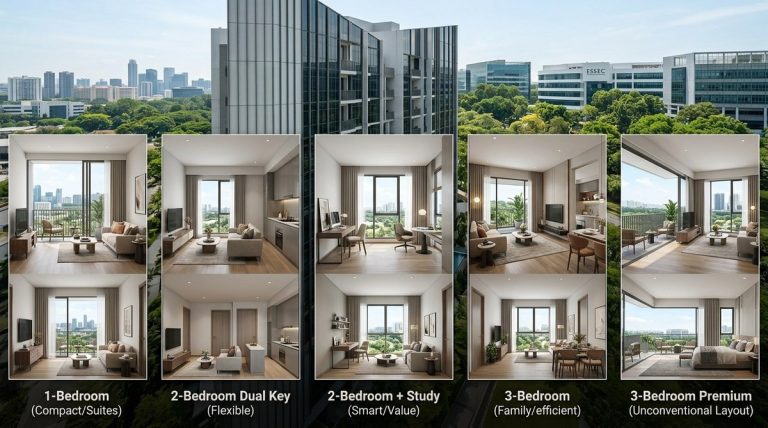
    The Hill at One North offers varied layouts that appeal to different tenant segments. Understanding which configurations rent most easily helps optimize your investment.

    One-bedroom units (around 500 square feet) attract single professionals and young couples. These tenants prioritize location over space. Turnover runs higher in this segment, but so does rental demand.

    Two-bedroom layouts (700 to 850 square feet) represent the sweet spot for many investors. They appeal to couples, small families, and professionals who need a home office. Rental demand stays strong across economic cycles.

    Three-bedroom units (1,000 to 1,200 square feet) target families with children or expatriate couples wanting extra space. These tenants typically stay longer, reducing turnover costs.

    Four-bedroom configurations (1,400+ square feet) serve a niche market of larger families or senior professionals. Rental pools shrink at this size, potentially extending vacancy periods.

    For pure investment purposes, two-bedroom units often deliver the best balance of rental yield, tenant demand, and capital appreciation potential.

    Location Advantages Beyond One North

    The Hill at One North investment gains additional appeal from surrounding amenities. Holland Village sits 10 minutes away, offering diverse dining and entertainment options. Tenants value this lifestyle component.

    The Queensway Shopping Centre provides affordable sports equipment and outdoor gear. IKEA Alexandra and Anchorpoint Shopping Centre handle everyday shopping needs. These practical amenities matter for families.

    Transportation connectivity continues improving. One North MRT station serves the Circle Line. Buona Vista station connects Circle and East-West Lines. The upcoming Cross Island Line will add another interchange at King Albert Park, further enhancing accessibility.

    For families with children, the area offers several reputable schools. Fairfield Methodist School (Primary), CHIJ Kellock, and Pei Hwa Presbyterian Primary School all operate within 2 kilometres. Secondary school options include Crescent Girls’ School and Queenstown Secondary.

    Comparing Alternative Investments

    Responsible investors always consider opportunity costs. How does The Hill at One North investment stack up against alternatives?

    Singapore REITs: Commercial REITs currently yield 5% to 7%, higher than residential property. However, they lack the leverage benefits of mortgaged property and offer less control over your investment.

    Government Bonds: Singapore Savings Bonds provide 3% to 3.5% returns with zero risk. Property offers potential appreciation but comes with leverage risk, illiquidity, and management hassles.

    Stock Market Index Funds: Historical returns average 7% to 9% annually, exceeding typical property appreciation. However, volatility runs much higher, and you can’t leverage stock purchases at 75% loan-to-value like property.

    Other Property Locations: Freehold condos in Districts 9, 10, and 11 offer similar tenure benefits with different locational characteristics. Some provide better rental yields, others stronger appreciation potential.

    The right choice depends on your financial situation, risk tolerance, and investment timeline. Property works best for investors who can hold 10+ years, handle illiquidity, and manage tenant relationships.

    Risk Factors to Consider

    Every investment carries risks. For The Hill at One North, potential concerns include:

    Interest Rate Sensitivity: Rising interest rates increase mortgage costs, reducing net rental income. Rates have climbed from historic lows, and further increases could pressure yields.

    Economic Cycles: Recessions reduce rental demand and can trigger price corrections. One North’s employment focus provides some insulation, but no location is recession-proof.

    Government Policy Changes: New property cooling measures, changes to foreigner buying rules, or shifts in One North development plans could impact values.

    Maintenance Costs: Older developments face rising maintenance fees as facilities age. While The Hill at One North is relatively new, this factor becomes relevant over 15 to 20-year holding periods.

    Tenant Quality Variance: Not all tenants maintain properties equally. Wear and tear, late payments, and early terminations create costs and headaches.

    Successful investors plan for these contingencies by maintaining cash reserves, stress-testing their finances against rate increases, and selecting tenants carefully.

    Tax Implications for Investors

    Property investment in Singapore carries specific tax obligations. Rental income gets taxed at your marginal income tax rate. For high earners, this can reach 22% on rental proceeds.

    Property tax applies annually based on the property’s annual value. Owner-occupied properties enjoy lower rates, but investment properties face higher assessments.

    If you sell within three years of purchase, Seller’s Stamp Duty applies at punitive rates (12% in year one, 8% in year two, 4% in year three). This policy discourages speculation and favours long-term holders.

    Foreign investors face Additional Buyer’s Stamp Duty of 60% on top of standard stamp duty. This makes The Hill at One North investment primarily viable for Singapore citizens and permanent residents.

    Financing Strategies

    Most investors finance property purchases with mortgages. Current loan-to-value limits allow 75% financing for first properties, dropping to 45% for second properties and beyond.

    Interest rates have risen from pandemic lows. Fixed-rate packages now range from 3.5% to 4.2% for two to three-year terms. Floating rates tied to SORA average 4.0% to 4.5%.

    Your Total Debt Servicing Ratio cannot exceed 55% of gross monthly income. This caps how much you can borrow based on your income level.

    Running the numbers on a S$2 million unit:

    • Down payment (25%): S$500,000
    • Loan amount: S$1,500,000
    • Monthly payment at 4%: approximately S$7,200
    • Monthly rental income: approximately S$5,200
    • Monthly shortfall: S$2,000

    This negative cash flow is typical for Singapore property investments. Investors rely on capital appreciation rather than positive monthly income to generate returns.

    Making Your Decision

    The Hill at One North investment suits specific investor profiles. You’re a good fit if you:

    • Plan to hold for at least 10 years
    • Can handle monthly negative cash flow comfortably
    • Value freehold tenure over maximum rental yield
    • Believe in One North’s long-term development trajectory
    • Want exposure to Singapore’s knowledge economy growth

    You might look elsewhere if you:

    • Need positive monthly cash flow from day one
    • Prefer higher rental yields over capital preservation
    • Want to flip properties within 3 to 5 years
    • Seek maximum leverage on second or third properties
    • Prioritize liquidity and easy exit options

    Property investment isn’t binary. The Hill at One North represents one option among many in Singapore’s diverse real estate market.

    Your Next Steps as an Investor

    Start by visiting the development during different times of day. Walk around One North during morning rush hour and evening hours. Observe who lives and works in the area.

    Talk to current owners if possible. Property forums and Facebook groups often connect investors willing to share experiences. Ask about tenant quality, vacancy periods, and maintenance issues.

    Run detailed financial projections using conservative assumptions. Factor in 1% annual rent increases, occasional vacancy months, and rising interest rates. See if the numbers still work under stress conditions.

    Consider engaging a buyer’s agent who specializes in District 5 properties. Their market knowledge can help you negotiate better terms and avoid overpaying.

    Most importantly, ensure this investment aligns with your broader financial plan. Property should complement, not dominate, your investment portfolio. Diversification remains the foundation of sound wealth building, regardless of how promising any single opportunity appears.

  • Is The Hill at One North a Good Investment in 2024?

    Property investors eyeing One North have probably noticed The Hill’s distinctive architecture rising above the tech district. This freehold development sits at the intersection of Singapore’s innovation hub and established residential enclaves, creating a unique proposition for those looking to park capital in real estate.

    Key Takeaway

    The Hill at One North investment offers freehold tenure in a government-backed innovation district with strong rental demand from research professionals and tech workers. Units range from compact one-bedders to spacious four-bedroom layouts, with rental yields averaging 3.2% to 3.8%. Capital appreciation potential hinges on One North’s continued development as Singapore’s knowledge economy hub, though current pricing sits at premium levels compared to surrounding estates.

    Why One North Matters for Property Investors

    One North isn’t just another business park. The government designated this 200-hectare site as Singapore’s answer to Silicon Valley back in 2001. Today, it houses Fusionopolis, Biopolis, and Mediapolis, employing thousands of researchers, scientists, and tech professionals.

    These workers need homes. Many prefer living within walking distance of their labs and offices. The Hill at One North sits right at the edge of this employment cluster, making it a natural choice for renters who value convenience over space.

    The freehold status changes the investment equation significantly. While 99-year leasehold properties face lease decay concerns, freehold units maintain their land value indefinitely. For investors with 15 to 20-year holding periods, this distinction becomes material.

    Current Market Position and Pricing

    The Hill at One North launched in phases, with prices ranging from S$2,200 to S$2,600 per square foot depending on unit type and floor level. One-bedroom units start around S$1.3 million, while four-bedroom penthouses exceed S$4 million.

    These numbers place the development at the upper end of District 5 pricing. Comparable freehold projects like Stirling Residences and The Pinnacle@Duxton trade at similar levels, though both offer different locational advantages.

    For context, nearby 99-year leasehold developments in Buona Vista typically price 15% to 20% lower. The freehold premium is evident, but justified for investors seeking long-term value preservation.

    Rental Yield Analysis

    Rental yields tell you how much annual income your property generates relative to purchase price. For The Hill at One North investment, current market data shows:

    Unit Type Average Rent Estimated Purchase Price Gross Yield
    1-bedroom S$3,800/month S$1,350,000 3.4%
    2-bedroom S$5,200/month S$1,950,000 3.2%
    3-bedroom S$7,000/month S$2,650,000 3.2%
    4-bedroom S$9,500/month S$3,800,000 3.0%

    These yields sit slightly below Singapore’s overall condo average of 3.5% to 4.0%. The trade-off comes in tenant quality and vacancy rates. One North attracts stable, high-income professionals with strong employment prospects.

    Vacancy periods typically run shorter here than in suburban estates. When a tenant moves out, replacement tenants often appear within two to three weeks during peak hiring seasons.

    Tenant Profile and Demand Drivers

    Understanding who rents at The Hill at One North helps predict future demand. The primary tenant segments include:

    • Research scientists at Biopolis working on biomedical projects
    • Tech professionals employed by companies in Fusionopolis
    • Media industry workers at Mediapolis
    • Expatriate families with one spouse working in One North
    • Graduate students and post-doctoral researchers at nearby institutions

    National University of Singapore and Singapore Polytechnic sit within 2 kilometres. INSEAD’s Asia campus operates in nearby Buona Vista. This educational infrastructure creates steady demand from visiting professors and international students.

    The government continues investing in One North’s development. Phase 3 expansion plans include additional research facilities and commercial spaces, which will bring more employment to the area.

    “Freehold properties in employment clusters offer downside protection during market corrections. Even if capital values stagnate, rental demand from working professionals remains resilient because people still need to live near their jobs.” — Property analyst perspective

    Capital Appreciation Potential

    Predicting property appreciation requires looking at historical trends and future catalysts. The Hill at One North benefits from several positive factors:

    Government Support: One North receives ongoing public investment as part of Singapore’s economic strategy. New MRT connections, upgraded cycling paths, and enhanced amenities continue improving the precinct’s appeal.

    Limited Supply: Few freehold residential sites remain in District 5. The government releases land primarily on 99-year leasehold terms. This scarcity supports long-term value.

    Demographic Shifts: Singapore’s knowledge economy continues expanding. The proportion of workers in research, technology, and innovation sectors grows each year, supporting demand for homes near these employment hubs.

    However, realistic investors should consider potential headwinds. The development launched during a market peak. Units purchased at top-of-cycle prices may require 5 to 7 years before seeing meaningful appreciation.

    Comparable freehold projects in similar locations have delivered 3% to 5% annual appreciation over 10-year periods. This matches or slightly exceeds inflation, providing real value preservation rather than explosive gains.

    Steps to Evaluate Your Investment Decision

    Making sound property investment decisions requires systematic analysis. Here’s how to approach The Hill at One North investment:

    1. Calculate your true cost of ownership including mortgage interest, property tax, maintenance fees, and insurance.
    2. Research current rental rates by speaking with agents who handle One North properties specifically.
    3. Factor in vacancy periods of at least one month per year to create realistic income projections.
    4. Compare net yields (after all expenses) against alternative investments like REITs or bond funds.
    5. Assess your holding period honestly because transaction costs eat into returns for short holds.
    6. Visit the area during weekday mornings and evenings to observe foot traffic and tenant activity.
    7. Review upcoming developments in One North that might affect rental demand or property values.

    The fifth point matters more than many investors realize. Buyer’s stamp duty, seller’s stamp duty (if applicable), agent commissions, and legal fees can total 6% to 8% of property value. You need meaningful appreciation just to break even on these costs.

    Unit Layout Considerations

    The Hill at One North offers varied layouts that appeal to different tenant segments. Understanding which configurations rent most easily helps optimize your investment.

    One-bedroom units (around 500 square feet) attract single professionals and young couples. These tenants prioritize location over space. Turnover runs higher in this segment, but so does rental demand.

    Two-bedroom layouts (700 to 850 square feet) represent the sweet spot for many investors. They appeal to couples, small families, and professionals who need a home office. Rental demand stays strong across economic cycles.

    Three-bedroom units (1,000 to 1,200 square feet) target families with children or expatriate couples wanting extra space. These tenants typically stay longer, reducing turnover costs.

    Four-bedroom configurations (1,400+ square feet) serve a niche market of larger families or senior professionals. Rental pools shrink at this size, potentially extending vacancy periods.

    For pure investment purposes, two-bedroom units often deliver the best balance of rental yield, tenant demand, and capital appreciation potential.

    Location Advantages Beyond One North

    The Hill at One North investment gains additional appeal from surrounding amenities. Holland Village sits 10 minutes away, offering diverse dining and entertainment options. Tenants value this lifestyle component.

    The Queensway Shopping Centre provides affordable sports equipment and outdoor gear. IKEA Alexandra and Anchorpoint Shopping Centre handle everyday shopping needs. These practical amenities matter for families.

    Transportation connectivity continues improving. One North MRT station serves the Circle Line. Buona Vista station connects Circle and East-West Lines. The upcoming Cross Island Line will add another interchange at King Albert Park, further enhancing accessibility.

    For families with children, the area offers several reputable schools. Fairfield Methodist School (Primary), CHIJ Kellock, and Pei Hwa Presbyterian Primary School all operate within 2 kilometres. Secondary school options include Crescent Girls’ School and Queenstown Secondary.

    Comparing Alternative Investments

    Responsible investors always consider opportunity costs. How does The Hill at One North investment stack up against alternatives?

    Singapore REITs: Commercial REITs currently yield 5% to 7%, higher than residential property. However, they lack the leverage benefits of mortgaged property and offer less control over your investment.

    Government Bonds: Singapore Savings Bonds provide 3% to 3.5% returns with zero risk. Property offers potential appreciation but comes with leverage risk, illiquidity, and management hassles.

    Stock Market Index Funds: Historical returns average 7% to 9% annually, exceeding typical property appreciation. However, volatility runs much higher, and you can’t leverage stock purchases at 75% loan-to-value like property.

    Other Property Locations: Freehold condos in Districts 9, 10, and 11 offer similar tenure benefits with different locational characteristics. Some provide better rental yields, others stronger appreciation potential.

    The right choice depends on your financial situation, risk tolerance, and investment timeline. Property works best for investors who can hold 10+ years, handle illiquidity, and manage tenant relationships.

    Risk Factors to Consider

    Every investment carries risks. For The Hill at One North, potential concerns include:

    Interest Rate Sensitivity: Rising interest rates increase mortgage costs, reducing net rental income. Rates have climbed from historic lows, and further increases could pressure yields.

    Economic Cycles: Recessions reduce rental demand and can trigger price corrections. One North’s employment focus provides some insulation, but no location is recession-proof.

    Government Policy Changes: New property cooling measures, changes to foreigner buying rules, or shifts in One North development plans could impact values.

    Maintenance Costs: Older developments face rising maintenance fees as facilities age. While The Hill at One North is relatively new, this factor becomes relevant over 15 to 20-year holding periods.

    Tenant Quality Variance: Not all tenants maintain properties equally. Wear and tear, late payments, and early terminations create costs and headaches.

    Successful investors plan for these contingencies by maintaining cash reserves, stress-testing their finances against rate increases, and selecting tenants carefully.

    Tax Implications for Investors

    Property investment in Singapore carries specific tax obligations. Rental income gets taxed at your marginal income tax rate. For high earners, this can reach 22% on rental proceeds.

    Property tax applies annually based on the property’s annual value. Owner-occupied properties enjoy lower rates, but investment properties face higher assessments.

    If you sell within three years of purchase, Seller’s Stamp Duty applies at punitive rates (12% in year one, 8% in year two, 4% in year three). This policy discourages speculation and favours long-term holders.

    Foreign investors face Additional Buyer’s Stamp Duty of 60% on top of standard stamp duty. This makes The Hill at One North investment primarily viable for Singapore citizens and permanent residents.

    Financing Strategies

    Most investors finance property purchases with mortgages. Current loan-to-value limits allow 75% financing for first properties, dropping to 45% for second properties and beyond.

    Interest rates have risen from pandemic lows. Fixed-rate packages now range from 3.5% to 4.2% for two to three-year terms. Floating rates tied to SORA average 4.0% to 4.5%.

    Your Total Debt Servicing Ratio cannot exceed 55% of gross monthly income. This caps how much you can borrow based on your income level.

    Running the numbers on a S$2 million unit:

    • Down payment (25%): S$500,000
    • Loan amount: S$1,500,000
    • Monthly payment at 4%: approximately S$7,200
    • Monthly rental income: approximately S$5,200
    • Monthly shortfall: S$2,000

    This negative cash flow is typical for Singapore property investments. Investors rely on capital appreciation rather than positive monthly income to generate returns.

    Making Your Decision

    The Hill at One North investment suits specific investor profiles. You’re a good fit if you:

    • Plan to hold for at least 10 years
    • Can handle monthly negative cash flow comfortably
    • Value freehold tenure over maximum rental yield
    • Believe in One North’s long-term development trajectory
    • Want exposure to Singapore’s knowledge economy growth

    You might look elsewhere if you:

    • Need positive monthly cash flow from day one
    • Prefer higher rental yields over capital preservation
    • Want to flip properties within 3 to 5 years
    • Seek maximum leverage on second or third properties
    • Prioritize liquidity and easy exit options

    Property investment isn’t binary. The Hill at One North represents one option among many in Singapore’s diverse real estate market.

    Your Next Steps as an Investor

    Start by visiting the development during different times of day. Walk around One North during morning rush hour and evening hours. Observe who lives and works in the area.

    Talk to current owners if possible. Property forums and Facebook groups often connect investors willing to share experiences. Ask about tenant quality, vacancy periods, and maintenance issues.

    Run detailed financial projections using conservative assumptions. Factor in 1% annual rent increases, occasional vacancy months, and rising interest rates. See if the numbers still work under stress conditions.

    Consider engaging a buyer’s agent who specializes in District 5 properties. Their market knowledge can help you negotiate better terms and avoid overpaying.

    Most importantly, ensure this investment aligns with your broader financial plan. Property should complement, not dominate, your investment portfolio. Diversification remains the foundation of sound wealth building, regardless of how promising any single opportunity appears.

  • How Much Can You Save on Property Tax at The Hill at One North?

    Property tax is one of those costs that sneaks up on buyers. You’ve saved for the deposit, budgeted for stamp duty, and planned your monthly mortgage. Then you realise there’s an annual bill from IRAS waiting for you.

    At The Hill at One North, understanding your property tax obligation helps you plan better. The amount you pay depends on whether you live in the unit or rent it out. The difference can be substantial.

    Key Takeaway

    Property tax at The Hill at One North varies based on occupancy status and Annual Value. Owner-occupiers pay progressive rates from 0% to 32% on their Annual Value, whilst investors face 12% to 36%. A unit with $36,000 Annual Value costs roughly $1,800 yearly for residents but $5,040 for landlords. Accurate valuation, timely appeals, and occupancy declarations can reduce your bill significantly.

    How Property Tax Works in Singapore

    Singapore property tax is based on Annual Value, not purchase price. Annual Value represents the estimated yearly rent your property could fetch if you leased it out.

    IRAS calculates this figure by looking at actual rental transactions of similar units in your area. They consider size, location, amenities, and lease remaining. The Hill at One North sits in a prime district with excellent transport links and nearby research institutions, which affects its Annual Value.

    Once IRAS determines your Annual Value, they apply progressive tax rates. The rates differ dramatically between owner-occupied and non-owner-occupied properties.

    Owner-occupier rates start at 0% for the first $8,000 of Annual Value. They climb progressively to 4% for values between $8,001 and $55,000, then continue upward to a maximum of 32% for values exceeding $130,000.

    Non-owner-occupied properties face steeper rates. The starting tier is 12% for the first $30,000 of Annual Value, rising to 36% for amounts above $90,000.

    This structure means investment properties cost significantly more in annual tax.

    Calculating Your Annual Bill at The Hill at One North

    Let’s work through a practical example. Suppose your two-bedroom unit at The Hill at One North has an Annual Value of $36,000.

    Owner-Occupied Scenario

    1. First $8,000 at 0% = $0
    2. Next $47,000 ($55,000 minus $8,000) at 4% = $1,880
    3. Remaining amount: $36,000 minus $55,000 = $0 (your AV doesn’t reach this tier)

    Wait, let me recalculate. Your Annual Value is $36,000 total.

    1. First $8,000 at 0% = $0
    2. Next $28,000 ($36,000 minus $8,000) at 4% = $1,120
    3. Total annual property tax = $1,120

    Your monthly cost works out to about $93.

    Investment Property Scenario

    The same unit rented out faces different rates.

    1. First $30,000 at 12% = $3,600
    2. Next $6,000 ($36,000 minus $30,000) at 20% = $1,200
    3. Total annual property tax = $4,800

    That’s $400 monthly, more than four times the owner-occupier rate.

    The gap widens as Annual Value increases. A larger unit with $50,000 Annual Value would cost an owner-occupier around $1,880 yearly but an investor $7,600.

    What Affects Your Annual Value

    IRAS reviews Annual Values regularly. Several factors influence the figure assigned to your unit.

    Location premium plays a major role. The Hill at One North benefits from proximity to one-north business park, Buona Vista MRT, and established schools. These amenities push rental potential higher.

    Unit characteristics matter too. Floor level, facing, view, and condition all contribute. A high-floor unit with unblocked views commands higher rent than a low-floor unit facing another block.

    Market conditions shift over time. If rental rates in the Buona Vista area climb, IRAS adjusts Annual Values upward during their next review cycle. Conversely, softening rental markets can lower your Annual Value.

    Renovation and improvements generally don’t trigger immediate revaluation unless you apply for building plan approval. Minor cosmetic updates won’t change your Annual Value between review cycles.

    IRAS typically reviews residential properties once every year or two. You’ll receive a notice if your Annual Value changes.

    Owner-Occupier vs Investment Tax Rates

    The government designed this two-tier system deliberately. Lower rates for owner-occupiers encourage Singaporeans to buy homes they actually live in. Higher rates for investment properties help moderate speculative buying.

    To qualify for owner-occupier rates, you must meet specific conditions. The property must be your residential address registered with relevant government agencies. You cannot rent out the entire unit.

    Partial rental complicates matters. If you rent out one bedroom while occupying the rest, IRAS may apply blended rates or treat the entire property as non-owner-occupied. Always declare your occupancy status accurately.

    Changing occupancy triggers rate changes. When you move out and rent the entire unit, you must inform IRAS. They’ll switch you to investment property rates from the date you vacated.

    Similarly, moving back in allows you to revert to owner-occupier rates. File the necessary declaration promptly to avoid overpaying.

    Occupancy Status Rate Structure Example Tax on $36,000 AV Monthly Cost
    Owner-Occupied 0% to 32% progressive $1,120 $93
    Investment 12% to 36% progressive $4,800 $400
    Vacant Same as investment $4,800 $400

    Vacant units face investment rates even though they generate no rental income. There’s no discount for leaving your property empty.

    Common Mistakes That Increase Your Tax Bill

    Many property owners pay more than necessary due to simple oversights.

    Failing to update occupancy status tops the list. If you sell your primary residence and move into your Hill at One North unit, you must file an owner-occupier claim. Without it, you continue paying investment rates.

    Ignoring Annual Value notices can be costly. IRAS sends notifications when they revise your Annual Value. Review these carefully. If the figure seems too high compared to actual market rents, you have grounds to appeal.

    Missing appeal deadlines locks you into potentially inflated valuations. You have 30 days from the notice date to file an objection. After that window closes, you’re stuck with the assessed value until the next review.

    Incorrect declarations create problems too. Some owners claim owner-occupier status while actually renting out the unit. IRAS conducts checks. Getting caught means backdated bills, penalties, and potential legal issues.

    Not claiming reliefs leaves money on the table. Property tax rebates occasionally appear in national budgets. These typically apply automatically, but verify your bill reflects any announced rebates.

    “Property tax is straightforward if you stay on top of your occupancy status and review your Annual Value notices promptly. Most disputes arise from outdated information or missed deadlines. Keep IRAS informed of any changes and challenge valuations that don’t match market reality.” — Property tax consultant

    How to Challenge Your Annual Value

    If your Annual Value seems excessive, you can object. The process requires evidence and attention to detail.

    Start by researching comparable rentals. Check property portals for similar units at The Hill at One North and nearby developments. Note the asking rents for units with similar size, floor level, and facing.

    Actual transacted rents carry more weight than asking prices. If you have access to rental contracts for comparable units, gather those documents.

    Submit your objection within 30 days of receiving the Annual Value notice. Include your supporting evidence and explain why you believe the assessed value is too high.

    IRAS will review your submission. They may request additional information or arrange a site inspection. Respond promptly to any queries.

    If IRAS maintains their valuation and you still disagree, you can appeal to the Valuation Review Board. This step involves more formal procedures and potentially legal representation.

    Most cases settle before reaching the Board. IRAS adjusts valuations when presented with solid evidence of lower market rents.

    Strategies to Manage Your Property Tax

    You can’t eliminate property tax, but smart planning reduces the impact.

    Choose your occupancy wisely. If you’re deciding between living in your Hill at One North unit or renting it out while staying elsewhere, run the numbers. The tax savings from owner-occupier status might outweigh rental income, especially after accounting for income tax on that rental income.

    Time your moves strategically. If you plan to relocate, consider the tax implications. Moving out mid-year means paying investment rates for the remainder of that year. Timing your move to coincide with the start of a tax year minimises the investment-rate period.

    Keep documentation organised. Maintain records of your occupancy status, rental agreements if applicable, and correspondence with IRAS. This paper trail helps if questions arise later.

    Monitor market conditions. If rental rates in the Buona Vista area soften, your next Annual Value review might bring a reduction. Conversely, rising rents signal potential increases. Budget accordingly.

    Consider the total ownership cost. Property tax is just one component. Add maintenance fees, sinking fund contributions, mortgage interest, and insurance. The complete picture helps you decide whether to hold, sell, or rent.

    Factor tax into investment returns. Investors often focus on rental yield and capital appreciation. Don’t forget the annual property tax bill. A unit generating $3,000 monthly rent looks attractive until you subtract $400 monthly tax, plus income tax on the rental income.

    Special Considerations for The Hill at One North

    This development has unique characteristics that affect property tax planning.

    Leasehold tenure means the property has a finite lease. As the lease shortens, rental potential typically declines, which should eventually lower Annual Values. However, this effect becomes pronounced only in later decades.

    Mixed-use location near one-north attracts both families and professionals. This broad tenant pool supports stable rental rates, which in turn maintains Annual Values.

    Accessibility via Buona Vista MRT and major expressways enhances desirability. Transport links directly influence rental potential and therefore Annual Value assessments.

    Nearby amenities including schools, parks, and shopping centres add value. IRAS considers these factors when determining Annual Values.

    Future developments in the one-north precinct could affect property values and rents. Keep an eye on announced projects. Major new developments might boost or dampen rental rates depending on whether they add amenities or competing supply.

    Understanding local market trends helps you anticipate Annual Value changes.

    Rental rates in the Buona Vista corridor have remained relatively stable over recent years. The area attracts steady demand from professionals working at nearby business parks and researchers at institutes in one-north.

    New condo launches in the vicinity add supply, which can moderate rental growth. However, the area’s strong employment base provides ongoing tenant demand.

    During economic downturns, rental rates typically soften. The 2020 pandemic period saw some rental declines as expatriates left Singapore and demand weakened. Annual Values adjusted downward in subsequent reviews.

    As the economy recovered, rents firmed up again. IRAS reflected these changes in their valuations.

    Monitoring rental listings for The Hill at One North and comparable developments gives you advance warning of potential Annual Value shifts.

    Planning for Future Tax Changes

    Property tax policy can change. Government budgets sometimes adjust rates or introduce new reliefs.

    Stay informed about policy announcements. Budget speeches in February each year often include property-related measures. These might affect your annual bill.

    Build some buffer into your financial planning. If you’re budgeting based on current owner-occupier rates, remember that moving out would quadruple your tax bill. Ensure you can afford investment rates if your circumstances change.

    For investors, treat property tax as a fixed cost similar to maintenance fees. It’s non-negotiable and recurs annually. Factor it into your cash flow projections from day one.

    Consider tax implications when deciding between properties. A slightly cheaper unit with higher Annual Value might cost more overall than a pricier unit with lower Annual Value, once you account for annual property tax over your holding period.

    Making Sense of Your Annual Bill

    Property tax at The Hill at One North is predictable once you understand the system. Your Annual Value drives the calculation, and your occupancy status determines which rate schedule applies.

    Owner-occupiers enjoy substantially lower rates. Investors and those leaving units vacant pay significantly more. The gap between these scenarios can reach thousands of dollars annually.

    Stay on top of your occupancy declarations. Challenge Annual Values that don’t reflect market reality. Keep records organised and respond promptly to IRAS notices.

    Run the numbers before making occupancy decisions. Sometimes the tax savings from living in your unit outweigh the rental income you’d earn by moving out.

    Property tax is just one piece of the ownership puzzle, but it’s a recurring cost that deserves attention in your financial planning. Understanding how it works at The Hill at One North helps you budget accurately and avoid unwelcome surprises when the annual bill arrives.

  • How Much Can You Save on Property Tax at The Hill at One North?

    How Much Can You Save on Property Tax at The Hill at One North?

    Property tax is one of those costs that sneaks up on buyers. You’ve saved for the deposit, budgeted for stamp duty, and planned your monthly mortgage. Then you realise there’s an annual bill from IRAS waiting for you.

    At The Hill at One North, understanding your property tax obligation helps you plan better. The amount you pay depends on whether you live in the unit or rent it out. The difference can be substantial.

    Key Takeaway

    Property tax at The Hill at One North varies based on occupancy status and Annual Value. Owner-occupiers pay progressive rates from 0% to 32% on their Annual Value, whilst investors face 12% to 36%. A unit with $36,000 Annual Value costs roughly $1,800 yearly for residents but $5,040 for landlords. Accurate valuation, timely appeals, and occupancy declarations can reduce your bill significantly.

    How Property Tax Works in Singapore

    Singapore property tax is based on Annual Value, not purchase price. Annual Value represents the estimated yearly rent your property could fetch if you leased it out.

    IRAS calculates this figure by looking at actual rental transactions of similar units in your area. They consider size, location, amenities, and lease remaining. The Hill at One North sits in a prime district with excellent transport links and nearby research institutions, which affects its Annual Value.

    Once IRAS determines your Annual Value, they apply progressive tax rates. The rates differ dramatically between owner-occupied and non-owner-occupied properties.

    Owner-occupier rates start at 0% for the first $8,000 of Annual Value. They climb progressively to 4% for values between $8,001 and $55,000, then continue upward to a maximum of 32% for values exceeding $130,000.

    Non-owner-occupied properties face steeper rates. The starting tier is 12% for the first $30,000 of Annual Value, rising to 36% for amounts above $90,000.

    This structure means investment properties cost significantly more in annual tax.

    Calculating Your Annual Bill at The Hill at One North

    How Much Can You Save on Property Tax at The Hill at One North? - Illustration 1

    Let’s work through a practical example. Suppose your two-bedroom unit at The Hill at One North has an Annual Value of $36,000.

    Owner-Occupied Scenario

    1. First $8,000 at 0% = $0
    2. Next $47,000 ($55,000 minus $8,000) at 4% = $1,880
    3. Remaining amount: $36,000 minus $55,000 = $0 (your AV doesn’t reach this tier)

    Wait, let me recalculate. Your Annual Value is $36,000 total.

    1. First $8,000 at 0% = $0
    2. Next $28,000 ($36,000 minus $8,000) at 4% = $1,120
    3. Total annual property tax = $1,120

    Your monthly cost works out to about $93.

    Investment Property Scenario

    The same unit rented out faces different rates.

    1. First $30,000 at 12% = $3,600
    2. Next $6,000 ($36,000 minus $30,000) at 20% = $1,200
    3. Total annual property tax = $4,800

    That’s $400 monthly, more than four times the owner-occupier rate.

    The gap widens as Annual Value increases. A larger unit with $50,000 Annual Value would cost an owner-occupier around $1,880 yearly but an investor $7,600.

    What Affects Your Annual Value

    IRAS reviews Annual Values regularly. Several factors influence the figure assigned to your unit.

    Location premium plays a major role. The Hill at One North benefits from proximity to one-north business park, Buona Vista MRT, and established schools. These amenities push rental potential higher.

    Unit characteristics matter too. Floor level, facing, view, and condition all contribute. A high-floor unit with unblocked views commands higher rent than a low-floor unit facing another block.

    Market conditions shift over time. If rental rates in the Buona Vista area climb, IRAS adjusts Annual Values upward during their next review cycle. Conversely, softening rental markets can lower your Annual Value.

    Renovation and improvements generally don’t trigger immediate revaluation unless you apply for building plan approval. Minor cosmetic updates won’t change your Annual Value between review cycles.

    IRAS typically reviews residential properties once every year or two. You’ll receive a notice if your Annual Value changes.

    Owner-Occupier vs Investment Tax Rates

    The government designed this two-tier system deliberately. Lower rates for owner-occupiers encourage Singaporeans to buy homes they actually live in. Higher rates for investment properties help moderate speculative buying.

    To qualify for owner-occupier rates, you must meet specific conditions. The property must be your residential address registered with relevant government agencies. You cannot rent out the entire unit.

    Partial rental complicates matters. If you rent out one bedroom while occupying the rest, IRAS may apply blended rates or treat the entire property as non-owner-occupied. Always declare your occupancy status accurately.

    Changing occupancy triggers rate changes. When you move out and rent the entire unit, you must inform IRAS. They’ll switch you to investment property rates from the date you vacated.

    Similarly, moving back in allows you to revert to owner-occupier rates. File the necessary declaration promptly to avoid overpaying.

    Occupancy Status Rate Structure Example Tax on $36,000 AV Monthly Cost
    Owner-Occupied 0% to 32% progressive $1,120 $93
    Investment 12% to 36% progressive $4,800 $400
    Vacant Same as investment $4,800 $400

    Vacant units face investment rates even though they generate no rental income. There’s no discount for leaving your property empty.

    Common Mistakes That Increase Your Tax Bill

    Many property owners pay more than necessary due to simple oversights.

    Failing to update occupancy status tops the list. If you sell your primary residence and move into your Hill at One North unit, you must file an owner-occupier claim. Without it, you continue paying investment rates.

    Ignoring Annual Value notices can be costly. IRAS sends notifications when they revise your Annual Value. Review these carefully. If the figure seems too high compared to actual market rents, you have grounds to appeal.

    Missing appeal deadlines locks you into potentially inflated valuations. You have 30 days from the notice date to file an objection. After that window closes, you’re stuck with the assessed value until the next review.

    Incorrect declarations create problems too. Some owners claim owner-occupier status while actually renting out the unit. IRAS conducts checks. Getting caught means backdated bills, penalties, and potential legal issues.

    Not claiming reliefs leaves money on the table. Property tax rebates occasionally appear in national budgets. These typically apply automatically, but verify your bill reflects any announced rebates.

    “Property tax is straightforward if you stay on top of your occupancy status and review your Annual Value notices promptly. Most disputes arise from outdated information or missed deadlines. Keep IRAS informed of any changes and challenge valuations that don’t match market reality.” — Property tax consultant

    How to Challenge Your Annual Value

    If your Annual Value seems excessive, you can object. The process requires evidence and attention to detail.

    Start by researching comparable rentals. Check property portals for similar units at The Hill at One North and nearby developments. Note the asking rents for units with similar size, floor level, and facing.

    Actual transacted rents carry more weight than asking prices. If you have access to rental contracts for comparable units, gather those documents.

    Submit your objection within 30 days of receiving the Annual Value notice. Include your supporting evidence and explain why you believe the assessed value is too high.

    IRAS will review your submission. They may request additional information or arrange a site inspection. Respond promptly to any queries.

    If IRAS maintains their valuation and you still disagree, you can appeal to the Valuation Review Board. This step involves more formal procedures and potentially legal representation.

    Most cases settle before reaching the Board. IRAS adjusts valuations when presented with solid evidence of lower market rents.

    Strategies to Manage Your Property Tax

    You can’t eliminate property tax, but smart planning reduces the impact.

    Choose your occupancy wisely. If you’re deciding between living in your Hill at One North unit or renting it out while staying elsewhere, run the numbers. The tax savings from owner-occupier status might outweigh rental income, especially after accounting for income tax on that rental income.

    Time your moves strategically. If you plan to relocate, consider the tax implications. Moving out mid-year means paying investment rates for the remainder of that year. Timing your move to coincide with the start of a tax year minimises the investment-rate period.

    Keep documentation organised. Maintain records of your occupancy status, rental agreements if applicable, and correspondence with IRAS. This paper trail helps if questions arise later.

    Monitor market conditions. If rental rates in the Buona Vista area soften, your next Annual Value review might bring a reduction. Conversely, rising rents signal potential increases. Budget accordingly.

    Consider the total ownership cost. Property tax is just one component. Add maintenance fees, sinking fund contributions, mortgage interest, and insurance. The complete picture helps you decide whether to hold, sell, or rent.

    Factor tax into investment returns. Investors often focus on rental yield and capital appreciation. Don’t forget the annual property tax bill. A unit generating $3,000 monthly rent looks attractive until you subtract $400 monthly tax, plus income tax on the rental income.

    Special Considerations for The Hill at One North

    This development has unique characteristics that affect property tax planning.

    Leasehold tenure means the property has a finite lease. As the lease shortens, rental potential typically declines, which should eventually lower Annual Values. However, this effect becomes pronounced only in later decades.

    Mixed-use location near one-north attracts both families and professionals. This broad tenant pool supports stable rental rates, which in turn maintains Annual Values.

    Accessibility via Buona Vista MRT and major expressways enhances desirability. Transport links directly influence rental potential and therefore Annual Value assessments.

    Nearby amenities including schools, parks, and shopping centres add value. IRAS considers these factors when determining Annual Values.

    Future developments in the one-north precinct could affect property values and rents. Keep an eye on announced projects. Major new developments might boost or dampen rental rates depending on whether they add amenities or competing supply.

    Annual Value Trends in the Buona Vista Area

    Understanding local market trends helps you anticipate Annual Value changes.

    Rental rates in the Buona Vista corridor have remained relatively stable over recent years. The area attracts steady demand from professionals working at nearby business parks and researchers at institutes in one-north.

    New condo launches in the vicinity add supply, which can moderate rental growth. However, the area’s strong employment base provides ongoing tenant demand.

    During economic downturns, rental rates typically soften. The 2020 pandemic period saw some rental declines as expatriates left Singapore and demand weakened. Annual Values adjusted downward in subsequent reviews.

    As the economy recovered, rents firmed up again. IRAS reflected these changes in their valuations.

    Monitoring rental listings for The Hill at One North and comparable developments gives you advance warning of potential Annual Value shifts.

    Planning for Future Tax Changes

    Property tax policy can change. Government budgets sometimes adjust rates or introduce new reliefs.

    Stay informed about policy announcements. Budget speeches in February each year often include property-related measures. These might affect your annual bill.

    Build some buffer into your financial planning. If you’re budgeting based on current owner-occupier rates, remember that moving out would quadruple your tax bill. Ensure you can afford investment rates if your circumstances change.

    For investors, treat property tax as a fixed cost similar to maintenance fees. It’s non-negotiable and recurs annually. Factor it into your cash flow projections from day one.

    Consider tax implications when deciding between properties. A slightly cheaper unit with higher Annual Value might cost more overall than a pricier unit with lower Annual Value, once you account for annual property tax over your holding period.

    Making Sense of Your Annual Bill

    Property tax at The Hill at One North is predictable once you understand the system. Your Annual Value drives the calculation, and your occupancy status determines which rate schedule applies.

    Owner-occupiers enjoy substantially lower rates. Investors and those leaving units vacant pay significantly more. The gap between these scenarios can reach thousands of dollars annually.

    Stay on top of your occupancy declarations. Challenge Annual Values that don’t reflect market reality. Keep records organised and respond promptly to IRAS notices.

    Run the numbers before making occupancy decisions. Sometimes the tax savings from living in your unit outweigh the rental income you’d earn by moving out.

    Property tax is just one piece of the ownership puzzle, but it’s a recurring cost that deserves attention in your financial planning. Understanding how it works at The Hill at One North helps you budget accurately and avoid unwelcome surprises when the annual bill arrives.

  • 5 Reasons Why The Hill at One North Is Perfect for Young Families

    You’ve been scrolling through property listings for weeks. Another condo promises the world, but you need the real story before making the biggest purchase of your life.

    The Hill at One North sits in a neighbourhood that’s transformed from research park to residential hotspot. But does it actually work for families raising young children? Let’s break down what you’re really getting.

    Key Takeaway

    The Hill at One North offers 140 units across two towers with layouts from one to four bedrooms. Located near research institutions and tech companies, it suits families valuing proximity to international schools, nature parks, and MRT access. Prices reflect the mature estate premium, but rental yields remain competitive due to expatriate demand in the One-North corridor.

    What You’re Actually Getting at The Hill

    The development sits on a 99-year leasehold site along North Buona Vista Road. Two residential towers rise 24 storeys, housing 140 units total.

    Unit sizes range from 506 square feet for one-bedroom apartments to 1,679 square feet for four-bedroom penthouses. Most family-focused buyers look at the three-bedroom units, which span roughly 1,100 to 1,200 square feet.

    Each apartment comes with at least one balcony. The larger units feature dual-key configurations, letting you rent out a portion while keeping the main living space private. This matters when you’re calculating mortgage payments against potential rental income.

    The developer completed construction in 2018. You’re buying into an established development, not waiting years for completion. Current residents have already stress-tested the facilities and management.

    Location Breakdown for Daily Family Life

    5 Reasons Why The Hill at One North Is Perfect for Young Families - Illustration 1

    One-North MRT station sits 600 metres away. That’s about an eight-minute walk with a stroller. The Circle Line connects you to Harbourfront in three stops and Marina Bay in fifteen minutes.

    Three international schools operate within a three-kilometre radius:

    • Singapore Polytechnic International (1.2 km)
    • Tanglin Trust School (2.8 km)
    • INSEAD Business School (2.5 km)

    Local primary schools include Blangah Rise Primary (1.8 km) and Queenstown Primary (2.2 km). Neither falls within the one-kilometre priority admission zone, so you’ll need to rely on other registration phases.

    Anchorpoint Shopping Centre and IKEA Alexandra are five minutes by car. For weekend family outings, Labrador Nature Reserve and Southern Ridges trail network start just across Buona Vista Road.

    The trade-off? You’re not in the traditional family estate heartlands. No hawker centre sits at your doorstep. The nearest coffeeshop clusters are at Ghim Moh or Queensway, both requiring a short drive or bus ride.

    Facilities That Matter When Kids Are Home

    The development includes these amenities:

    • 50-metre lap pool
    • Children’s wading pool with water play features
    • Playground with climbing structures
    • Gymnasium with cardio and weight equipment
    • Function room for birthday parties
    • Barbecue pits (two locations)
    • Tennis court

    The lap pool runs the length of the podium deck. Families appreciate that the children’s pool sits in a separate section with clear sightlines from the benches.

    One resident noted the playground equipment suits toddlers to lower primary ages. Older children tend to prefer the nearby Buona Vista Park for more challenging play structures.

    The function room books out fast on weekends. You’ll want to reserve at least a month ahead for birthday celebrations during peak periods (April to June, November to December).

    Parking comes at a premium. Each unit gets one lot. Additional bays cost around $250 monthly, subject to availability. If you’re a two-car household, factor this into your monthly expenses.

    Price Reality Check Against Alternatives

    5 Reasons Why The Hill at One North Is Perfect for Young Families - Illustration 2

    Recent transactions (Q4 2023 to Q1 2024) show three-bedroom units moving between $2.1 million and $2.4 million. That translates to roughly $1,900 to $2,100 per square foot.

    Here’s how that compares to nearby developments:

    Development Tenure Recent PSF Distance to MRT
    The Hill at One North 99-year $1,900-$2,100 600m
    Metropolis 99-year $2,000-$2,200 400m
    The Rochester Freehold $2,300-$2,500 800m
    d’Leedon 99-year $2,400-$2,600 900m

    The Hill sits at the lower end of the One-North price spectrum. You’re paying less than freehold alternatives but more than older developments further from the MRT.

    Rental yields hover around 3.2% to 3.5% annually. A three-bedroom unit renting for $5,500 monthly generates $66,000 yearly against a $2.2 million purchase price. That’s a 3% gross yield before accounting for property tax, maintenance fees, and mortgage interest.

    Who This Development Actually Suits

    The Hill works best for three buyer profiles:

    1. Young families with one to two children who prioritise MRT access over traditional neighbourhood amenities
    2. Professionals working in the Buona Vista research corridor who want a five-minute commute
    3. Investors targeting expatriate tenants employed by tech companies and research institutions

    It’s less ideal if you:

    • Need to be within one kilometre of a specific primary school
    • Prefer older, more established neighbourhoods with mature hawker culture
    • Want freehold tenure for long-term generational holding
    • Require immediate access to multiple childcare centres (only two within 500 metres)

    “We chose The Hill because my office is at Fusionopolis and my wife works near Buona Vista MRT. The commute savings alone are worth $300 monthly in transport costs. But we do miss having a hawker centre downstairs like our previous place in Toa Payoh.” – Current resident, father of two

    The Maintenance Fee Question

    Monthly maintenance fees run approximately $350 to $450 for three-bedroom units. That’s $4,200 to $5,400 annually.

    This covers:

    • Common area cleaning and upkeep
    • Landscaping and pool maintenance
    • Security personnel and CCTV monitoring
    • Lift servicing
    • Fire safety system checks

    The management recently upgraded the gym equipment and resurfaced the tennis court. Expect fees to increase 3% to 5% annually as the development ages and requires more intensive maintenance.

    Compare this to older condos in the area charging $250 to $300 monthly. You’re paying a premium for newer facilities, but those older developments will likely see sharper fee increases as major repairs become necessary.

    School Transport Logistics for Families

    No direct school bus routes service The Hill for most international schools. You’ll need to arrange private transport or drive your children to campus.

    Tanglin Trust School offers a bus service with a pickup point at One-North MRT, requiring a five to eight-minute walk from the condo. The morning pickup runs at 7:15am, returning between 3:30pm and 4pm depending on the route.

    For local primary schools outside the one-kilometre radius, you’re relying on the Primary One registration phases that don’t guarantee placement. Many families in the development supplement with enrichment centres in Queenstown or Buona Vista while waiting for school balloting results.

    The childcare situation requires planning. Only two centres operate within comfortable walking distance. Both maintain waitlists of six to twelve months for infant care spots. Apply as soon as you confirm your purchase.

    Investment Angle for First-Time Buyers

    The One-North corridor continues attracting tech companies and research institutions. Google’s regional headquarters sits two MRT stops away. The Biopolis and Fusionopolis complexes house thousands of expatriate professionals.

    This tenant pool values:

    • Proximity to workplaces
    • Modern facilities
    • MRT connectivity
    • International school access

    Your rental market is less affected by local economic cycles and more tied to corporate expansion in the research park. When tech companies hire, your rental demand increases.

    The 99-year lease started in 2015. You’re buying with 90 years remaining. For a 30-year holding period, you’ll still have 60 years left when you sell. Lease decay becomes a pricing factor mainly in the final 30 years.

    What Current Residents Actually Say

    Conversations with three families living at The Hill revealed consistent themes:

    Positives mentioned:
    – Genuinely short commute to One-North offices
    – Well-maintained facilities with responsive management
    – Strong sense of community among young families
    – Quiet environment despite proximity to main roads
    – Good natural ventilation in most units

    Common complaints:
    – Limited food options within walking distance
    – Parking shortage during evening hours
    – Playground equipment needs updating
    – Function room booking competition
    – Higher maintenance fees than expected

    One family noted the lack of a minimart in the development. You’ll need to walk to Ghim Moh or drive to Cold Storage at Rochester Mall for groceries.

    The Renovation and Resale Consideration

    Most units sold in the past year came with basic finishing. Expect to budget $50,000 to $80,000 for renovation if you want built-in wardrobes, kitchen upgrades, and flooring changes.

    The developer provided:

    • Basic kitchen cabinets and countertops
    • Standard bathroom fixtures
    • Painted walls
    • Basic lighting

    You’ll likely want to add:

    • Bedroom wardrobes
    • Living room feature walls
    • Upgraded kitchen appliances
    • Additional storage solutions
    • Window treatments

    Resale units sometimes include these renovations, potentially saving you the hassle but adding $100,000 to $150,000 to the purchase price.

    Check the remaining warranty period. The developer’s defect liability period covers one year from completion. Units sold in 2018 and 2019 have expired warranties, meaning you’re responsible for all repairs.

    Making Your Decision With Clear Eyes

    The Hill at One North delivers what it promises: a modern development near a major employment hub with decent facilities and MRT access.

    It won’t give you the established neighbourhood feel of older estates. You won’t find aunties selling fresh vegetables at a nearby wet market. The hawker centre experience requires a deliberate trip.

    But if your daily rhythm revolves around the One-North corridor, if international school proximity matters more than local primary school balloting, if you value a newer development over freehold tenure, then this development deserves serious consideration.

    Run the numbers against your actual lifestyle. Calculate the time saved on commuting. Price the convenience of walking to work. Factor the rental potential if you relocate for work.

    The best property decision isn’t about finding perfection. It’s about matching your actual needs to what a development genuinely offers, then making peace with the trade-offs that come with every choice.